Keeping Dog Diapers On: Real Tips From Someone Who’s Been Ther
Look, I get it. There’s nothing quite like turning a corner and finding your dog standing there looking guilty, diaper crumpled on the floor, and something unpleasant smeared across your hardwood. We’ve all been there.
My senior lab mix, Charlie, started needing diapers about two years ago. First week? I think I changed his diaper more times than I changed my own kid’s back in the day. They’d slip, slide, or somehow end up completely backwards. I was ready to throw in the towel.
But over time, I figured some stuff out. Nothing fancy, just practical things that actually work when you’re dealing with a wiggly, confused, or stubborn dog.
Start With the Right Diaper
This sounds obvious, but most people get this wrong. I did too.
Those “one size fits most” diapers? They don’t. Not really. My dog weighed 65 pounds, and the “large” diaper kept falling off no matter how tight I made the tabs. Turns out he needed an XL. The waist measurement mattered more than the weight recommendation on the box.
Here’s what I learned:
- Measure your dog’s waist where the diaper will sit (right in front of the back legs)
- Measure the hip circumference too
- If your dog is between sizes, think about their body shape. Narrow waist? Go smaller. Thick fur or broader hips? Size up.
Also, male and female dogs need different setups. Male dogs pee forward, so their diapers need extra coverage in the front. Female dogs need more coverage in the back. Using the wrong type means leaks, and leaks mean your dog will try to remove the whole thing.
The Tail Hole Problem
Ever notice how the tail hole on most diapers is either way too big or way too small?
Charlie had a thick, otter-like tail. The pre-cut holes were always too tight, pulling the whole diaper down whenever he wagged. I started carefully cutting the hole a bit larger with small scissors. Just a little at a time. Test fit. Cut more if needed.
For dogs with skinny tails, the opposite problem. The hole gaps open and the diaper shifts side to side. A small piece of medical tape around the tail base cinches it up nicely.
Diaper Covers Changed Everything
I’m embarrassed to admit how long it took me to discover these.
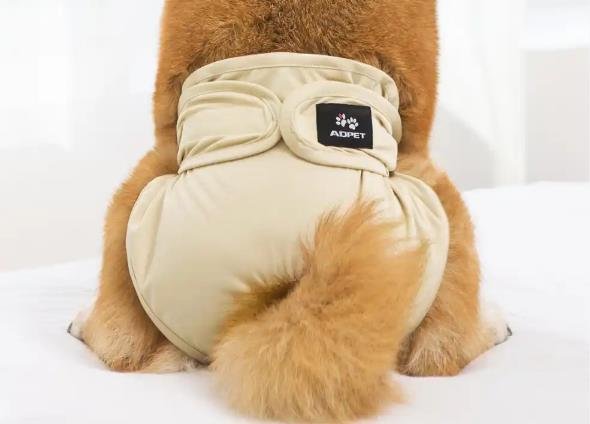
Disposable diapers are slippery. Dog fur is slippery. Together, they’re a disaster waiting to happen. A reusable diaper cover goes over the disposable one and has actual Velcro or snaps that adjust properly.
The cover grips the fur better. It holds the disposable diaper in place. And honestly, it just feels more secure. I stopped finding crumpled diapers around the house within a week of switching to this setup.
You can find them on Amazon or at pet stores. They’re washable, so you buy a few and rotate them. Worth every penny.
When Standard Options Fail
Some dogs are built in ways that make diapers tricky. Greyhounds have narrow waists. Bulldogs have round bellies that push everything down. Senior dogs might have odd shapes from weight loss or muscle changes.
For Charlie, I ended up using dog diaper suspenders. They’re exactly what they sound like—elastic straps that clip to the sides of the diaper and go over the back. Takes the pressure off the waist tabs.
You can also try:
- Vet wrap around the waist (sticks to itself, not fur)
- A baby onesie with the leg holes cut out, worn over the diaper
- Medical tape over the tabs for extra hold
Don’t feel like you have to stick with one method. Mix and match until something works.
Prep the Area
This one took me forever to figure out.
Charlie had fairly long fur around his rear end. The diaper tabs would stick to the hair, but the hair would pull out, and the tab would lose its grip. Started trimming the fur where the tabs attach. Not shaving, just shortening. Made a huge difference.
Also, make sure the area is dry before putting on a fresh diaper. Any moisture and the tabs won’t stick properly.
Watch for Discomfort
Here’s the thing. Even if the diaper stays on, your dog might hate it.
Check for red marks or chafing. If you see them, the fit is wrong or something’s rubbing. Adjust the tightness. Try a different brand. Some diapers have softer edges than others.
And pay attention to behavior. If your dog is constantly biting at the diaper or seems distressed, something’s not right. Could be the fit, could be they need more time to adjust, could be a medical issue making the area sensitive.
Give It Time
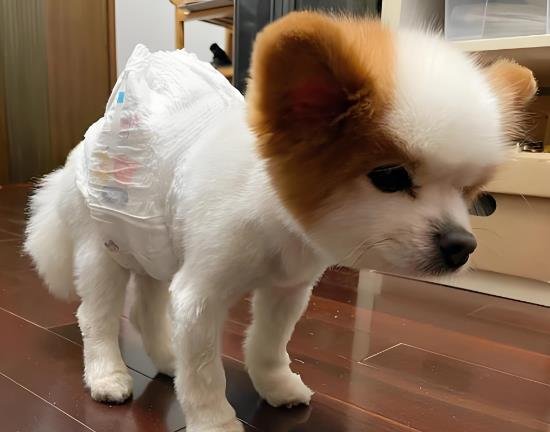
Charlie didn’t accept the diaper immediately. First few days, he walked like he was carrying something suspicious between his legs. Tried to sit down and immediately stood back up. Looked at me like I’d betrayed him.
I started with short periods. Diaper on for 15 minutes, treat, diaper off. Next day, 30 minutes. Built up slowly. Now he doesn’t even notice it.
Distraction helps. Put the diaper on, then immediately do something fun. Walk time. Meal time. Play time. They associate the diaper with good things instead of restriction.
The Reality Check
Sometimes, despite everything, the diaper still comes off. Dogs are determined creatures. If they decide something needs to come off, they’ll work at it like a puzzle.
Keep backups handy. Check regularly. And don’t beat yourself up when accidents happen. You’re doing your best to keep your dog comfortable and your house clean. That’s what matters.
One More Thing
If you’re using diapers because of incontinence or age-related issues, consider talking to your vet. Sometimes there are treatments or management options that can reduce how often diapers are needed. Charlie’s vet adjusted his medication and we went from changing diapers six times a day to three. Small wins add up.
At the end of the day, keeping a diaper on a dog is part engineering, part patience, and part acceptance that some days will be messier than others. You’ll figure it out. You might try five different methods before finding the one that works. That’s normal.
And when you finally get it right? When you stop finding diapers dragged across the floor like some kind of weird treasure? It’s a small victory, but it feels pretty great.
Good luck. You’ve got this. 🐕